
The Difference Between “Watch” and “Warning” is Time
In Greer, we all know the drill. First comes the “Watch”—conditions are favorable for freezing rain or the remnants of a tropical storm pushing inland from the coast. Then comes the “Warning”—ice is already accumulating on the power lines or the wind is whipping down Wade Hampton Blvd.
The gap between those two alerts is where safety happens. But if you wait until the Duke Energy outage map starts lighting up to check your equipment, you are too late. You don’t want to be the person trying to find the generator keys in the dark or realizing the unit is out of oil while the trees are cracking under the weight of winter ice.
Here is the Generator Supercenter “Life Goes On” Checklist to run through now, while the skies are blue.
1. The “Listen” Test (Don’t Trust the Light)
Most owners look at the green light on the side of their Generac and assume everything is fine. But a green light just means the electronics are happy.
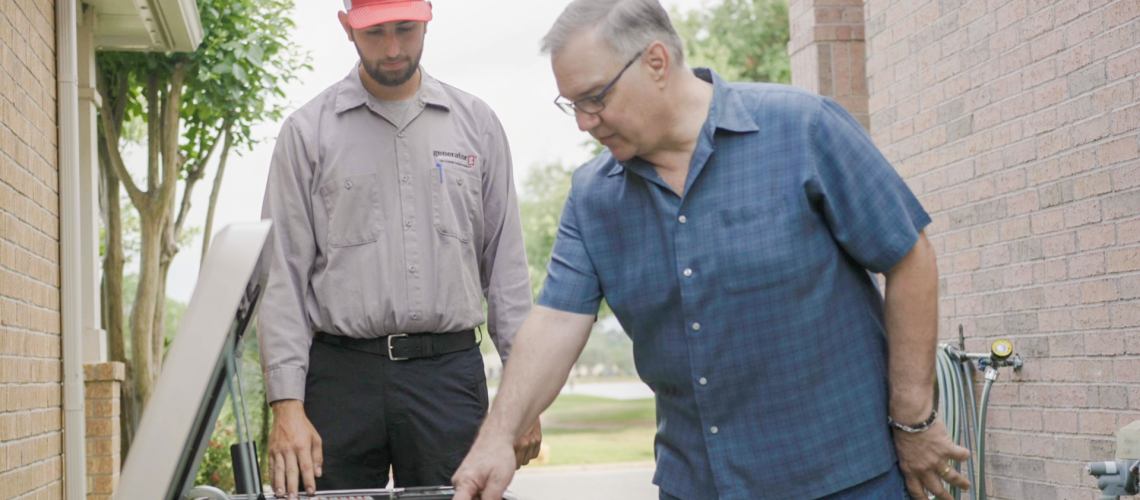
The Fix: Go outside. Open the lid. Manually switch the generator to “Run.” Listen to the engine. Does it sound smooth? Does it hunt for an idle? A rough idle now means a failed start later. (Don’t forget to switch it back to “Auto”!)
2. Check the Oil (The #1 Failure Point)
During a widespread outage in the Upstate, a generator might run for 3, 4, or 5 days straight depending on how severe the storm damage is.
The Fix: Check your oil level today. More importantly, do you have a spare quart of synthetic oil and a filter kit on the shelf? If the unit runs for 100 hours straight, you will need to service it during the outage.
3. Create the “Clear Zone”
Over the winter and spring, your generator likely became a magnet for garden hoses, patio furniture, and shrubbery.
The Fix: Clear a 3-to-5-foot radius around the unit. The engine needs to breathe intake air, and the exhaust needs to vent heat. If debris blocks the airflow, the unit will overheat and shut down to protect itself.
4. Verify Your Monitoring
Is your GenMon app connected? Did you change your home Wi-Fi password recently and forget to update the generator?
The Fix: Open the app today. Ensure it shows “Ready to Run.” If it’s offline, reconnect it now so GSC can monitor your status during the storm.
5. Secure the Sanctuary
Generators keep the power on, but you need to secure the rest.
The Fix:
- Lock down patio furniture (flying debris).
- Charge all handheld devices (as backups).
- Download the GSC Community Survival Guide.
Need a Professional Eye?
If you performed the “Listen Test” and something didn’t sound right, do not wait. Our service trucks are already deploying across Greenville and Spartanburg counties to prepare for the season.
You don’t have to face the uncertainty of ice storms or tropical remnants alone. Stop by our showroom at 1321 W. Wade Hampton Blvd to see the units in person and chat about your specific needs, or give us a ring at 864-469-6986. Let’s make sure that when the weather turns, your life goes on without interruption.